Showing posts with label Books. Show all posts

Friday, 9 December 2022

February in the Black

 For the past couple of years, every time I've finished a book I've taken a photograph of it, maybe hoping that this will make me read more. I took six photographs of books in January I see, and one in February. And none in March. Here's Holland Park. I'd get wheeled around here when I was one, so I've been told. I don't remember. Now it's just up the road.
 
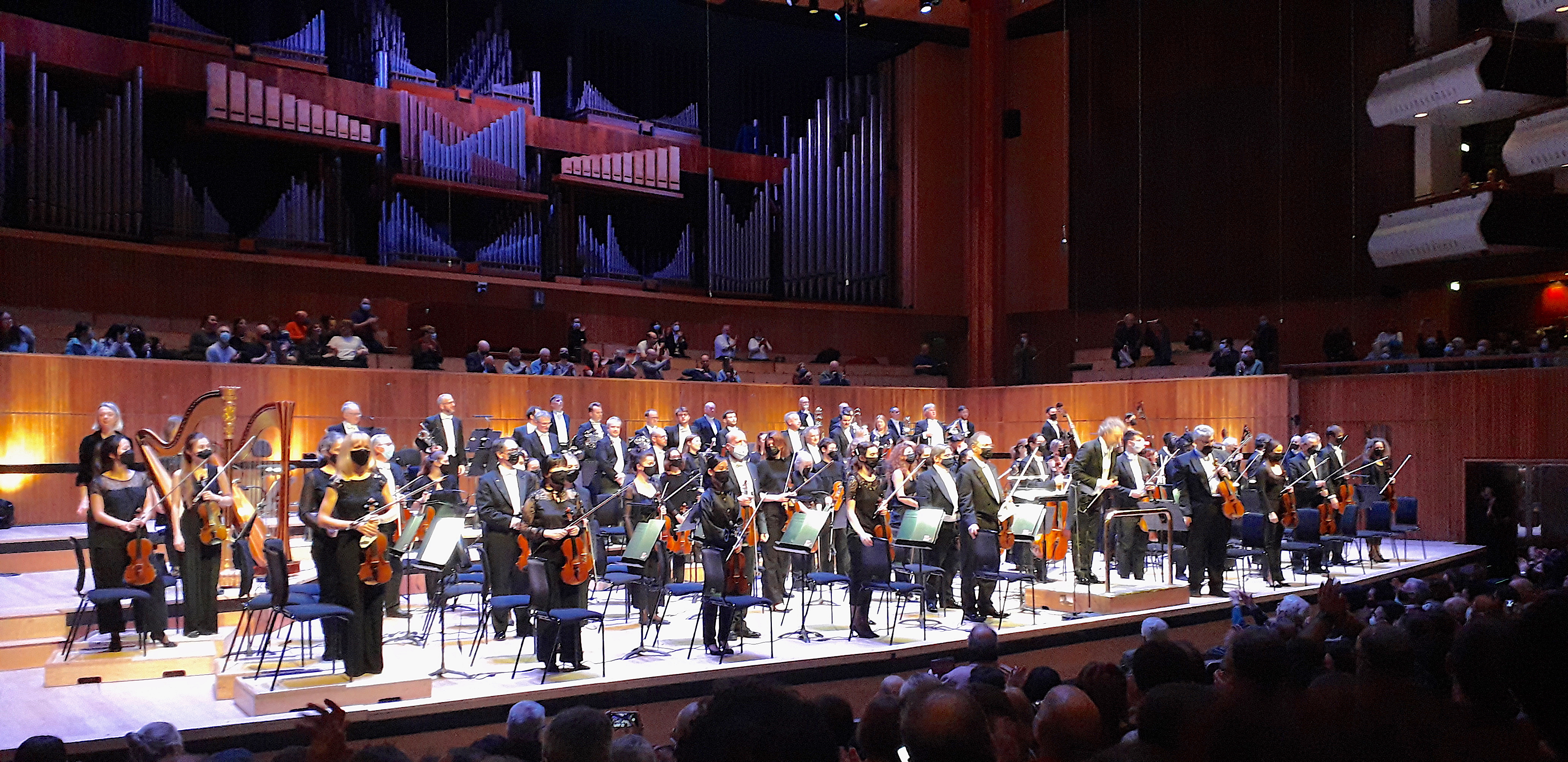
 Photographing Kensington was one thing I managed to keep up in February. Was I doing it hoping to feel more like a resident, or like a tourist? Did I want to feel more at home or the opposite? I still stayed sociable, although I stopped going to the BFI as much, another fad of January. But I still had spending money from my first two commercials shot at the end of 2021. I still met friends, and if I was twenty years younger maybe there'd be photogaphs of that too. Here's a concert I was invited to in February. I couldn't remember why I'd photographed it, until I looked closer and saw everyone's masks. Click to enlarge.
 

 I met Gemma Brockis a lot. I could afford to go out for coffee. We'd knock ideas about, her teaching and seeking meetings, me working a couple of days a week at the Crystal Maze and meandering. She told me how as an immersive theatre veteran she'd also occasionally get approached by Virtual Reality Engines to participate in Research and Development. Intimacy was what they were after now. "Virtual Intimacy" was VR's philopospher's stone.
 
 What does "intimacy" actually literally mean though, I asked? We talked about that a bit – Chris Goode used to ask it back when he still did the blog, and was alive – then I decided to just look it up on my phone. We all have an idea. What do you think it means? As far as I could work out, "intimacy" just means the opposite of loneliness. That doesn't seem to have much to do with Virtual Reality. I didn't think they were going to find it, and I made a note of that on my phone. That phone broke, but I remembered.
 

Friday, 2 December 2022

"We can't all, and some of us don't. That's all there is to it."

 
Illustrations by E. H. Shepard. That dragonfly is just perfect.

 Ernest Hemingway, who liked big, short statements, famously said, “All modern American literature comes from one book by Mark Twain called Huckleberry Finn. American writing comes from that." 
 I'm unlikely to change my mind that A. A. Milne's "Winnie-The-Pooh" holds a similar place in British Comedy, and since yesterday's post accidentally went out in the early hours of today, I'll linger a little longer on the story "In which Eeyore has a birthday and gets two presents". Here's an extact. I had forgotten Owl was in this story. I had also forgotten just how sketchy a character he is. (Does one lick pencils?)
     "It's a nice pot," said Owl, looking at it all round. "Couldn't I give it too? From both of us?"
     "No," said Pooh. "That would not be a good plan. Now I'll just wash it first, and then you can write on it."
     Well, he washed the pot out, and dried it, while Owl licked the end of his pencil, and wondered how to spell "birthday."
    "Can you read, Pooh?" he asked a little anxiously. "There's a notice about knocking and ringing outside my door, which Christopher Robin wrote. Could you read it?"
     "Christopher Robin told me what it said, and then I could." 
     "Well, I'll tell you what this says, and then you'll be able to."
     So Owl wrote... and this is what he wrote:
HIPY PAPY BTHUTHTH THUTHDA BTHUTHDAY.
Pooh looked on admiringly.

 If the Hundred Acre Wood is Dunder Mifflin, Owl is its Creed. And like Dunder Mifflin, or Michael & Eagle Lettings, or the Muppets, the company of Pooh have little in common; they're a team, not a gang – and like Charlie Brown, every character is an absolute mood. 
 I had also forgotten that this story gave us one of Jim Henson's favourite songs, "Cottleston Pie". Here it is, performed by another bear.
 

Unposted Photographs of November 2022 in Chronological Order

 It's always fascinating to see who's worn your costume before you.
 
 First day of the tube strikes. Choreography starts outside while we wait for the person with keys.

 I see a lot of these signs around Marylebone. I'm forty-eight and I still don't know what American Express is. Is it a credit card? What is it?
 
 We prepare for the plinth. I'm pretty sure it's bigger than this.
 
 After finding out Pizza Express no longer does Veniziana, I start photographing barriers because they remind me of Keir Starmer.

Thoughtlessly shitty quick fixes, looking increasingly unreplaceable.

 We're in the space. We go crazy.

 I acquaint myself with the backstage of the Cockpit.


 Show report: I tripped. Where were the barriers?
 
 "Vibrating pockets can still be heard in a dramatic silence." Tickets here.
 
 The Elizabeth Line is not for trypophobes.

 I get lost in Hampstead, and find some cosy blocks with globes in the window.

 Walking home from shows now, I notice the night sky is often coloured in. 
 
 I can't tell by what.
 
  Loughborough Junction has new lights too, where they used to build sets.
 
 Coldharbour Lane is getting a tower block.


 That's not all that's gone up since I left.
 
 I don't remember this book nook. It has a copy of WHSmith's "Treasury of Children's Literature". I sit and read.

 Treasury is a good word for it, although I don't get far with C. S. Forester's "Poo-Poo Finds a Dragon". 
 
 I do consider what kind of brain comes up with protagonists named "Hornblower", and "Poo-Poo".
 
 "Eeyore's Birthday" is also included, the alpha and omega of great sitcom writing. I read it aloud to myself quietly in its entirety, marvelling again, and upon reaching "'Not mine,' said Eeyore proudly" actually get a little teary.
 
 I return to Notting Hill to find Christmas has started. A different vibe.

Wednesday, 16 November 2022

Is Orson Welles the Perfect Hamlet or the Absolute Opposite? There's Only One Way to Find Out.

   Love Goddess, the musical in which I play – among other husbands of Rita Hayworth – Orson Welles, opens this Friday, and you can get tickets here. We're deep into tech week, so I don't have much time to blog, and I haven't even listened yet to what I'm posting today, but I'm looking forward to it.
 
Archie, Jane, me, Imogen, and Joey. I believe it's called proof of sweat.
 
 You'd have thought that, of all the big Shakespearean roles which the erudite, intellectual, procrastinatingly impatient, fatally disappointed, theatre-obsessed Welles had tackled, Hamlet would among them, and it turns out you'd be right. The only reason I didn't know this until I looked it up today, is that it was back in 1936 when Welles was still twenty-one, in a self-directed radio adaptation. Of course, he'd already staged Macbeth by then. My parents sent me the first volume of Simon Callow's massive biography "The Road To Xanadu" for my birthday, so I'll see what that has to say about it...
 
 Oh. Okay. So much for my interpretation then – of either Welles or Hamlet, take your pick. But no! Both feared they might be phonies, both feared their own monstrousness while also wishing they were more like the monsters, and there's not a single speech of Hamlet's I can't imagine in Welles' voice, so maybe it's Callow who's wrong. But he did write a massive biography. But he says it was a thirty-minute adaptation, and it's actually two thirty-minute adaptions. But they didn't have the internet back in 1995. But we do.


UPDATE: Okay, I've listened to it. I think it's fair to say there is one quite heavy omission. Can you guess what got cut?

Wednesday, 5 October 2022

The Silence

 I only finished reading Marianne Levy's Don't Forget To Scream on Monday so it's too early to say if it's changed my life, but I've definitely learnt something (beyond confirmation of a bias that polite society tragically underestimates how much people need looking after – you know, that bias). Specifically I've learnt that it won't matter if a book has words like "SCREAM" and "UNSPOKEN" on the front; if it also carries the word "MOTHERHOOD" that third will work like an aneasthetic against any content warning. (To try and mitigate this I've photographed the book on my most unpleasant table.) Like shouting for help in a language with no word for help, the very words used to describe "being a mum" have made protest impossible: 
"Perhaps I'm being hyperbolic but it felt like the Newspeak from Nineteen Eighty-Four, designed to make wrongthink impossible." 
 Marianne writes this in a chapter called Bumbo. In a later chapter, Some Discomfort, having described what the British Medical Journal terms the "wide range of physical and psychological consequences" of her episiotomy, she concludes:
"I almost hit delete before this made it onto the page." 
 I remember these two chapters as a swift double punch in the gut, but leafing back I find they're nearly a hundred pages apart. Partly that suggests how readable she is, but also it suggests why her cry for help needs to be the size of a book; because what Marianne describes is a living nightmare, and she descibes it over and over again, because she has to, because we're – I can't find another word for it – programmed by mumthink not to listen... Or, if we do listen, to place what we hear on its own separate, cuddlier scale of oppression. Because "being a mum" is clearly the most laughably trivial subject there is.
"Our dining table was designed for four..."
 Who are those Doctor Who monsters you forget as soon as you can't see them?
 Ideally, this is what "red-pilling" should refer to... I'd even read Marianne's interview in The Guardian, from which the photograph below is taken, describing very specifically what the book would contain, but still my mind was going: "Being a mum. Yeah. Crayons on flock wallpaper. Meh." And I know Marianne, a little, which is why I'm calling her Marianne, but look at that photo, look how cosy it is! It was only the interview's closing words which made me realise I might have missed something: “I’m desperate for men to read it; I’m desperate for people without kids to read it.”
 So I did, and I learnt something, and like any other sap who's had a veil lifted, I can't now think of anyone who shouldn't. Thanks therefore, Marianne, and congratulations.
 

Sunday, 26 December 2021

"I hear you let your forefather out of the cupboard!"

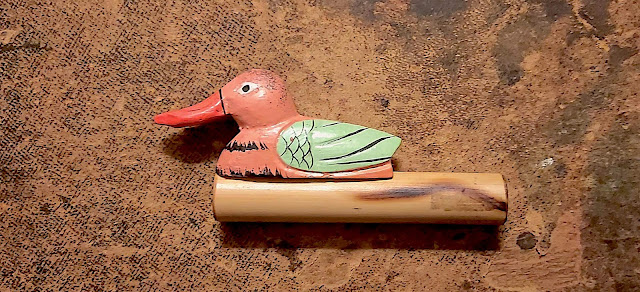
 Duck call as used in John Finnemore's Souvenir Programme!
 
 ANNOUNCEMENT: Series Nine of JFSP is getting a second airing, on Radio 4 tonight at 11pm, and every night thereafter until New Year's Eve, and producer Ed Morrish is planning a tweet-along tonight to accompany Episode One – the one starring Lawry Lewin. I might be asleep because I'm an hour ahead. Carrie might also be asleep, as they've started allowing her to drive ambulances, and Lawry's not even on twitter, but I'll see if I can get that fake account pretending to be him to join us instead.
 

 Of course, you can still hear any you episode you want, any time you like, on Sounds, and I say "of course" because I'm still rashly assuming that everyone reading this blog will have already heard it anyway. If you haven't, however, I've written a little about how much I love it, and why you shouldn't necessarily be expecting a sketch show, here. 
 In keeping with the theme of Series Nine, here's a Moomin being startled by his ancestors:


 I loved hearing John play Moomintroll on the radio yesterday by the way, and really recommend you listen to the production of "Moominland Midwinter" in which he did it. It's possibly my favourite adaptation yet of possibly my favourite books; I'm still trying to work out what my love of Tove Jansson says about me. The increasing marketability of her characters isn't helping, but I think what she taught me, uniquely among the childrens' authors I read, was that a story can be packed with fantasy and drama without any need for "adventure". This probably wasn't a particularly useful lesson to learn as a writer, but there's no unlearning it. 
 Here's another Moomin winter to enjoy.

Monday, 20 December 2021

Lighting Candles in the Cloud

 Monday was shrouded in mist, or cloud (I don't know how high up we are, here in Languedoc). Sat around Mum's computer on three chairs, we attended her brother Francis' funeral online, then drove carefully to the abbey in the next village, to light a candle for him. 
 
  The abbey's been here less time than Mum and Dad, only completed in 2018. I don't know who designs sanctuaries these days, but they understood the assignment. The small chapel we were taken to by the monk, where the candles were lit, was bright with stained glass, even in this weather, but the palette of the surrounding cloisters is far calmer, almost prehistoric, the colour of water and bone. And the windows of the main church aren't stained, but grooved like the sand in a karesansui garden, which my camera doesn't pick up.
 
 The earliest Christmas I remember, I was six or seven: I received a robot that broadcast a panorama of Saturn across its chest and fired missiles from its forehead (this one, in fact), and a beautifully illiminated boxed set of The Chronicles of Narnia, which I still own. I remember Mum conveying the excitement with which she and her brothers and sister would look forward to the next story coming out, but I'm only now realising the more personal connection: that its author had actually taught one of them. Apparently, C.S. Lewis considered Francis "the best mannered man of his generation I have ever met." I loved that box, but it would be decades before I got beyond The Horse and His Boy, although I still remember, vividly, its description of how surpisingly damp and grey it is to be inside a cloud. 
 Francis' service, if you wish, can be viewed here.
 

Friday, 2 April 2021

The Plague Year One Plague Year On

 
 April the Second marks one year since I decided to start reading aloud Daniel Defoe's "A Journal of the Plague Year" on Youtube, and I don't know how I feel about this anniverary, which I suppose means I don't particularly feel anything. I remember thinking at the time that the idea of a "Plague Year" was a good thing to seed though: there seemed no way this would be over by Christmas, let alone the Summer. I probably didn't imagine so many would be vaccinated by now, however. I probably didn't think about it. Actually: yes, reading Defoe was my way of not thinking about it, immersing myself in the knowns of 1722 instead of worrying about the unknowns of 2020. 
 Here it all is again anyway, for anyone who missed it (in either sense of the word). In further Youtubing news, April the Second also saw my friend Barbara bequeath her old iPad mini to me today, in the hope that its editing software would prove less petulant than my old version of iMovie, so maybe I'll start Youtubing again. Let's see. I know many, many people have had a far worse plague year than me. I hope you're all doing tremendously. 

Thursday, 25 March 2021

"The Mole felt a great Awe fall upon him..."

  Ten minutes walk from Kentish Town, there are roads entirely unchaperoned by lamplight, and where there is light, there are hills, and green, and gates. I don't think of horror passing these overgrowths, I think of a kinder magic, less prevalent onscreen - something I'd hoped to see when Peter Jackson had filmed Lord of the Rings in fact, but those elves turned out more monochromatic, less folksy than I had hoped.
 
  These days, the supernatural born of the natural in British art is nearly always either twee or terrifying. In the real world however – even in NW3 – it seems easy to still encounter uncomplicated awe, a connection to something pagan but unthreatening. Suddenly on my walk, I thought of the chapter in The Wind In The Willows that could never be included in adaptation, in which Mole and Ratty encounter a vision of Pan.
 
 Here imagined by E. H. Shepard (source).
 
 I'd read that this god had a particular significance to closeted Edwardians, and wondered if the inclusion of "The Piper at the Gates of Dawn", as the chapter's called, was Kenneth Grahame subtly shipping his two protagonists. I resolved to see if I could find the Cosgrove Hall version when I got home: the company's original adaptation had omitted the chapter, but I remembered it getting a whole episode when they came to make the series. And I found it, and it's perfect, still one of the most startling episodes of children's television you can imagine, the answer to a prayer. All hail Pan.

Saturday, 20 March 2021

Sir Arthur Conan Doyle and the Often Unenviable Fairy Seat


"A Dance around the Moon" by Charles Altamont Doyle

 I knew that the author of Sherlock Holmes believed in fairies, and was happy to identify, for example, Frances and Elsie's cardboard cut-outs (below) as evidence of psychic phenomena, despite such a verdict seeming to go against every tenet of his creation's practice of deductive reasoning.
 
  But what I didn't know – and what might go some way towards explaining this discrepancy – is how large a part fairies had played in the life of his father, the illustrator Charles Altamont Doyle...
 
 "Meditation, Self Portait" by Charles Altamont Doyle  
 
 According to Alistair Kneal's Transceltic blog, "his paintings were often of fantasy scenes, many featuring fairies..." but "after growing family worries about his moods and desperate attempts to obtain alcohol, he was admitted to the nursing home of Blairerno House at Drumlithie in the Mearns... Following an aggressive attempt to leave Blairerno House he was sent to Sunnyside, Montrose Royal Lunatic Asylum on 26 May 1885...


"The seat of fairies is not always enviable"
 
"It is described that he would tell staff that he was receiving messages from the unseen world and accused them of being devils... He maintained to his family that he was sane and had been wrongfully confined. In doing so he complied sketchbooks with caricatures, drawings of fairies and notes...
 
 Painting from "The Doyle Diary" 1889
 
"He inscribed the frontispiece of his sketchbook diary: ‘Keep steadily in view that this Book is ascribed wholly to the produce of a MADMAN. Whereabouts would you say was the deficiency of Intellect? or depraved taste? If in the whole book you can find a single evidence of either, mark it and record it against me.’"
 
 "The Spirits of the Prisoners" 1885
 
 And there's more of his work on Monster Brains.